From performance reviews to Skills Intelligence: how talent management is evolving
More and more often in conversations with HR leaders, I hear that the pace of business change is outstripping existing organizational processes. And it’s hard to disagree. The world of work and technology is accelerating rapidly, and HR must keep up: with technological transformation, new employee expectations, and executive pressure.
Over the past months, I have gathered key observations and takeaways that surface in nearly every discussion.
The first challenge is lack of predictability.
Companies launch new initiatives, adopt modern technologies, and modify operating models, but rarely update team competencies in tandem. HR feels as though it is looking in the rearview mirror while the organization races forward. Talent development decisions are often delayed because there is no clear view of which skills actually exist within the company today and which will be essential tomorrow.
The second challenge is data fragmentation.
Competencies documented in spreadsheets, performance metrics stored in legacy systems, evaluations kept elsewhere, and training logs scattered across disconnected tools. Many leaders tell me that data availability isn’t the problem; rather, it’s the inability to connect the dots. They lack a unified platform that brings everything together. Without it, HR operates on intuition, while managers rely on anecdotal impressions.
Next comes annual performance reviews, which still serve as the primary developmental tool in many organizations.
In practice, they are often too infrequent, overly generalized, and detached from day-to-day operations. In hybrid and remote environments, this friction has only magnified. Managers find evaluations challenging, employees rarely feel a tangible impact on their personal growth, and HR ends up gathering outdated data.

Then there is strategic business pressure.
Organizations must adapt to market dynamics faster than ever, meaning that competencies have become currency. When skill gaps exist, projects stall, customer satisfaction drops, or operational costs surge. Executive boards demand teams with specific capabilities, yet HR often lacks the tools to quickly verify competencies and plan targeted actions.
The fourth area is organizational culture.
While most companies agree that development is vital, they are often hesitant to make it an objective, data-driven process. There remains a lingering fear of evaluation, transparency, or shifting managerial habits.
HR frequently finds itself in the middle: knowing that change is essential, yet needing to rally the entire organization behind it.
And finally, the most critical topic: competency gaps.
Industries are shifting, new technologies arrive faster than ever, and employees genuinely need new skills. In many companies, reskilling is no longer an optional perk — it has become an absolute necessity. At the same time, teams lack clear skill maps, defined priorities, and structured frameworks that allow growth to happen systematically rather than ad hoc.
When synthesizing all these conversations, one common thread stands out: HR wants to work modernly, but often lacks the tools, time, or executive backing. At the same time, every HR practitioner I speak with clearly understands where the industry is heading.
- Greater predictability
- Tighter alignment with business objectives
- Data over guesswork
- Continuous development instead of one-off review events

All of this is happening right now. And even though the pace can feel overwhelming, I have immense admiration for HR professionals who balance everyday operational firefighting with long-term strategic vision.
If I had to highlight one takeaway that resonates most frequently, it would be this:
The future of HR does not rely simply on being aware of skills in the company, but on data integrity and consolidating that intelligence in one place.
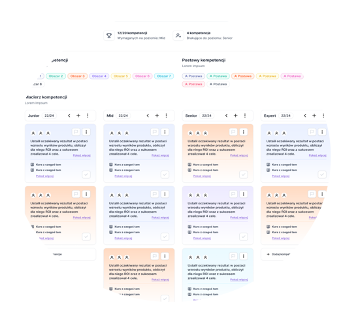
That is precisely why OutcomeSkills was built: to give HR a single platform where competencies become visible, measurable, and actionable amidst growing complexity. The challenges will not disappear, but we can address them directly and use them to build the future of our organizations.
This requires courage, openness, and a readiness to evolve — on both sides of the table.
I believe that drive exists in all of us. If you need a platform to navigate and accelerate this transformation, we are here to help. Reach out to us and let’s talk 🙂